Vanity and Basin Installation in Bribie Island
A vanity installation in Bribie Island is licensed plumbing work, because the tap, the supply lines and the waste all need a licensed plumber under Queensland law. Local Bribie Island Plumbing swaps vanities and basins across Bribie Island and the suburbs nearby, from a straight like-for-like swap to a moved basin. We disconnect the old unit, set the new one, then connect and leak-test every fitting.
If we're late, $100 comes off your bill

- Licensed and InsuredEvery job done by a licensed plumber. QBCC No: 15024607
- Fixed Quote FirstFlat-rate pricing, agreed before any work starts
- Lifetime Labour WarrantyBacked by our Fix-It-or-It's-Free guarantee (T&Cs apply)
- $0 Call-Out FeesNo extra charge for nights, weekends or public holidays

Most bathrooms here were fitted out between the 1960s and the 2000s, so a swap is usually a refresh rather than a rebuild. A new vanity or basin changes the whole feel of a compact bathroom, and the job itself is often smaller than owners expect.
Can You Fit a Vanity Yourself
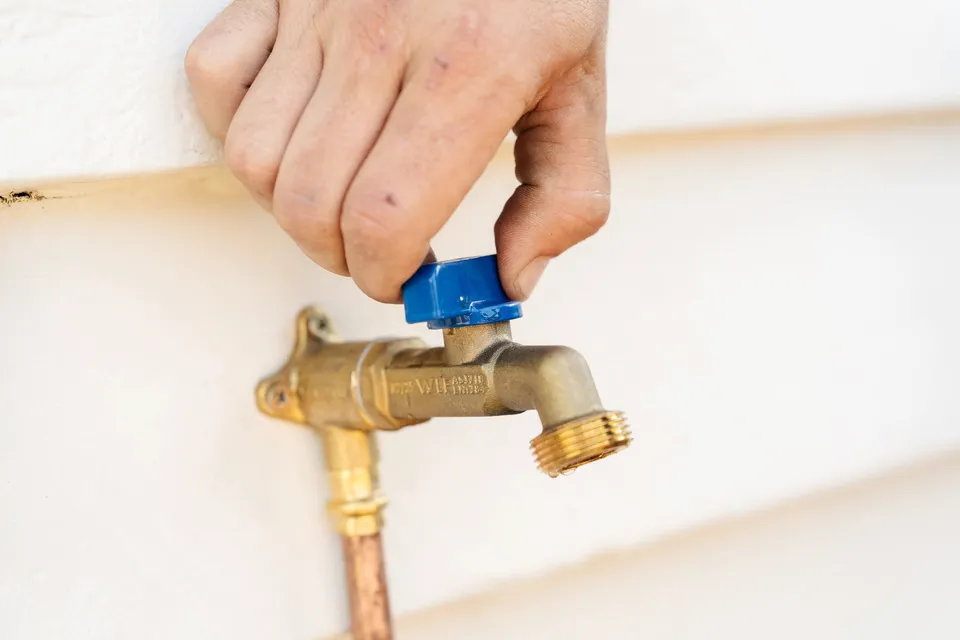
No. The tap, the supplies and the waste are regulated plumbing, so a licensed plumber does the connecting, and the work splits into two categories.
A vanity or basin swapped back into the same spot is minor work. Queensland law gives the job to a QBCC licensee, but no permit is needed and no Form 4 is lodged. A new, second or moved basin is notifiable work: no council permit applies, but the plumber lodges a Form 4 with the QBCC within 10 business days of completing the work.
Two situations add a wrinkle. An apartment owner has the plumber confirm the category first, because some apartment renovations are more complex and need a local government permit. A tenant needs written approval on Form 23 from the owner or property manager before a fixture goes in.

What Changes the Price of a Vanity Swap
Four things drive the price. They are whether the new unit sits where the old one sat, whether the supply or waste has to move, the tap and fittings the unit takes, and how easy the pipes are to reach.
A relocated or extra basin adds a fixed extra. That job is notifiable work, so the licensed contractor lodges the Form 4 and pays the QBCC lodgement fee, and can pass that fee, plus the admin around it, across to the owner.
The quote settles it. We give you a fixed quote before any work starts, so the number on the paper is the number on the invoice.

From Disconnect to Leak Test Under the Basin
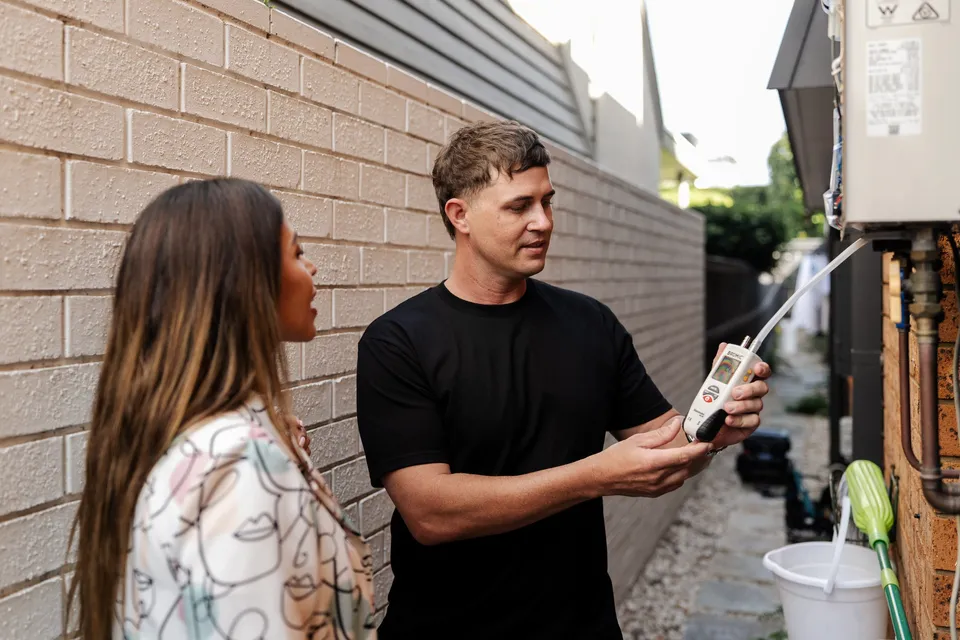
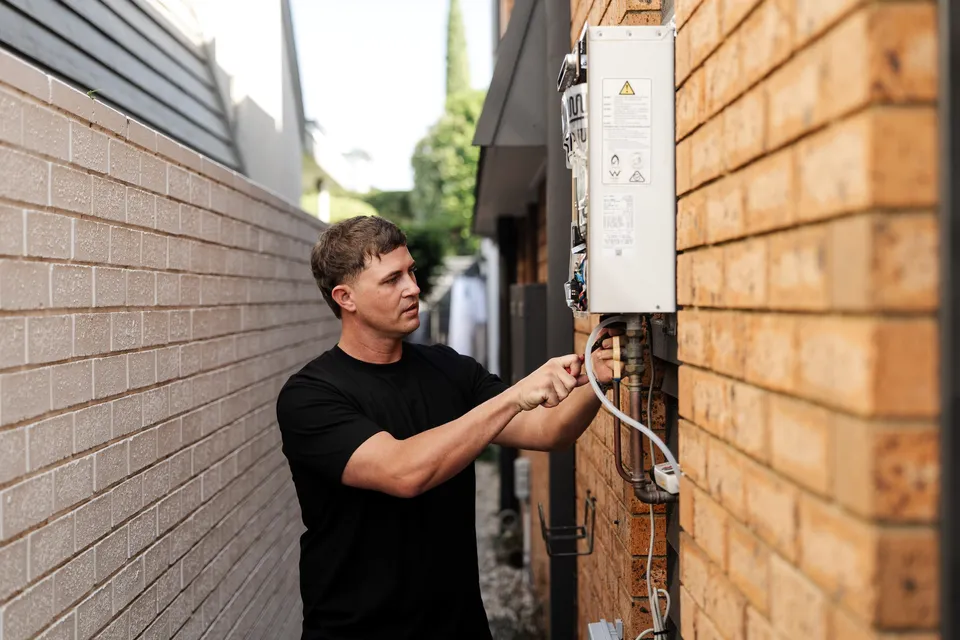
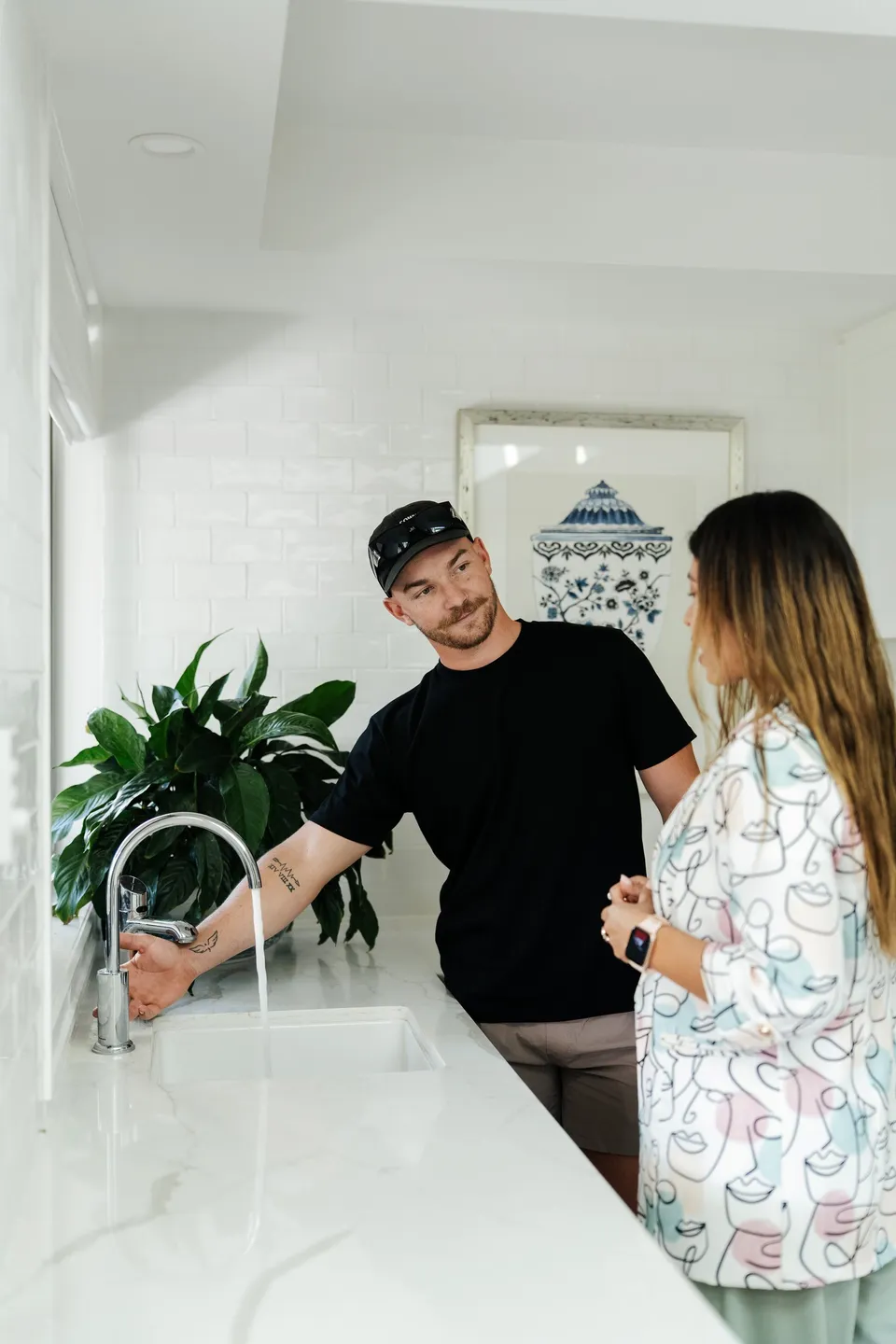
The plumber's list runs: disconnect the old tap and waste, connect the new tap through an isolation valve on each supply line, run the waste through a trap, then test every connection for leaks.
Each isolation valve shuts the water to the basin alone, so a later repair never means turning off the whole house. The trap keeps a water seal in the waste pipe, and that seal blocks sewer gas from rising up through the basin.
The waste fitting is matched to the basin. That means a pop-up or plug-and-chain waste, with an overflow connection where the basin has an overflow.
The new tap is a plumbing product, so it needs WaterMark certification plus registration under the Water Efficiency Labelling and Standards scheme (WELS) before installation is legal. Anything we supply carries both marks.
Tap Holes, Wastes and Set-Out Before You Order
The two vanity styles differ most in what sits behind them. A wall-hung vanity hangs from a wall built to carry its weight, with the supply and waste pipes at the right height inside the wall. A floor-standing vanity stands on the floor and hides the pipes in the cabinet, where a slow leak can go unnoticed until the base swells.
Basins come three ways. An above-counter basin sits on top of the benchtop, a semi-recessed basin sits partly into it, and an undermount basin is fixed and sealed underneath it, so its cut-out has to be exact.
Set-out is checked before the vanity is ordered, not after the box arrives. The number and spacing of the tap holes decide whether the basin takes a single mixer or separate taps, and switching between those two means reworking the holes and the supply pipes.
The waste position and the supply positions get the same treatment. Both are matched to the cabinet before the order goes in.

Why Island Bathrooms Shape the Quote
The urban south runs from 1960s cottages through the canal estates, and the era of the bathroom decides how the swap goes. A canal-estate bathroom off Sunderland Drive usually has modern pipework in the wall, while an older unit near the Bribie Island Research Centre at Woorim can hide supply lines that predate today's fittings.
Two local conditions reach under the vanity too. Mains through the older island suburbs are largely asbestos-cement, which cracks rather than corrodes, and a crack upstream can send silt into the house supply. We flush the supply and clean the inlet screen on a new tap before the mixer goes on.
Salt air off both shores also ages exposed brass early, so the isolation valves earn their keep here.
For the bigger jobs, our bathroom renovation plumbing page maps the full works, and shower repairs covers the wet wall beside the vanity. The everyday fixture work sits on our main bathroom plumbing page.
How We Fit Your New Vanity
- 1

Call or message us
Ring (07) 3520 4094 or use the form and describe what's going on in Bribie Island. A few details up front mean the right gear comes on the first trip.
- 2

Scope the set-out on site
We measure the old unit, check where the supply and waste sit, and confirm whether the new basin needs the same tap holes or a mixer. That visit settles whether the job is minor work or notifiable work, and what the Form 4 side of it involves.
- 3
Fixed quote, then the work
We give you a fixed quote before any work starts. It's flat-rate pricing with no hidden fees, and we only start once you approve it.
- 4
Settle up your way
Card and EFTPOS payment on site when the job's finished, or Fix now, pay later if that suits you better.
Plumbing job in Bribie Island?
$0 call-out fees, available 24/7, and same-day where we can.
Vanity Questions From Island Bathrooms
Call (07) 3520 4094Is a vanity swap minor work or notifiable work in Queensland?
A like-for-like swap in the same position is minor work, so a QBCC licensee does it with no permit and no Form 4. A basin that is brand new, added as a second, or shifted to a new spot is notifiable work, so there is no council permit, but the plumber lodges a Form 4 with the QBCC within 10 business days of completing the work.
What does a plumber do when fitting a new vanity in Bribie Island?
The plumber disconnects the old tap and waste, then connects the new tap through an isolation valve on each supply line. The waste runs through a trap, and every connection is leak-tested. The basin waste is matched to the basin, with an overflow connection where the basin has one.
Can just the basin be replaced and the vanity kept?
Yes, when the basin is a separate item from the benchtop. Where the basin and top are one moulded piece, they are replaced together. Either way, the plumber reconnects the tap and the waste and leak-tests the lot.
What is the difference between wall-hung and floor-standing vanities?
A wall-hung vanity hangs from a wall built to carry its weight, with the supply and waste pipes at the right height inside the wall. A floor-standing vanity stands on the floor and hides the pipes in the cabinet, so a slow leak under it can go unnoticed for months.
How much does vanity installation cost in Bribie Island?
The price turns on whether the supply and waste stay put or move, and on the tap and fittings the new vanity needs. A relocated or extra basin adds a Form 4 lodgement fee the plumber may pass on. A fixed quote, given once we have seen the job, settles the final number.

Call Us About the New VanityWe'll call you back.
Call (07) 3520 4094 to book a plumber in Bribie Island. We're available 24/7, with $0 call-out fees, flat-rate pricing and same-day where we can.
To claim your $0 call-out fee, call (07) 3520 4094 today.