Toilet Repairs in Bribie Island
A running toilet, water pooling at the base or a cistern that never quite fills: toilet repairs in Bribie Island come down to a handful of parts inside the cistern. Most are quick work for a licensed plumber, with $0 call-out fees on every visit. We handle these jobs across Bribie Island and the neighbouring suburbs, from the holiday-era cottages to the canal estates.
If we're late, $100 comes off your bill

- Licensed and InsuredEvery job done by a licensed plumber. QBCC No: 15024607
- Fixed Quote FirstFlat-rate pricing, agreed before any work starts
- Lifetime Labour WarrantyBacked by our Fix-It-or-It's-Free guarantee (T&Cs apply)
- $0 Call-Out FeesNo extra charge for nights, weekends or public holidays
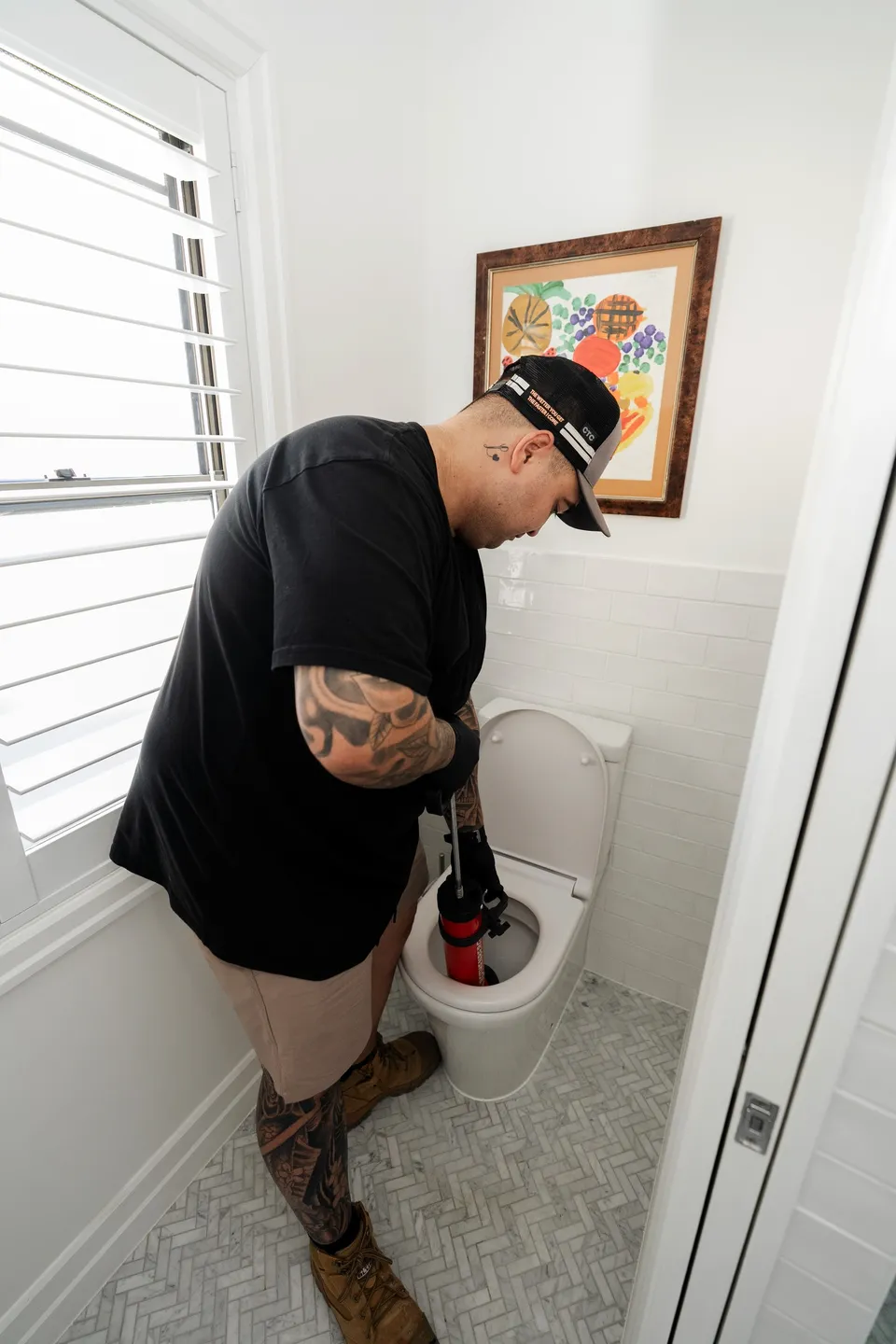
The Three Parts That Usually Fail
Three parts cause most cistern trouble: the inlet valve refills the cistern after a flush, the outlet valve holds that water between flushes, and the seals keep the joints dry.
Inlet valve
the inlet valve tops the cistern up after a flush and shuts off once the float reaches its set level. When the valve wears or blocks, the cistern fills slowly or never stops filling.
Outlet valve
the outlet valve keeps the water in the cistern between flushes. A worn outlet washer lets water slip into the pan, so the inlet valve keeps topping up and the toilet seems to run.
Seals and rubbers
the small washers and rubbers around both valves dry out and perish, especially in fittings that have already served for years.
A weak or partial flush usually points to the same parts from a different angle. The water level sits too low, the jet holes under the rim block up, or the flush mechanism sticks, and the flush loses its push.
Most running or leaking cisterns with a sound body are cured by replacing the inlet valve and the outlet washer together. That single visit settles both the running and the slow refill.

Silent Leaks and Sewer Smells
Leaks show in three places, and each place names its part: the cistern itself, the base where the pan sits, and the supply connection feeding the cistern.
Water on the floor around a toilet points to the pan connector, the seal inside it, a weeping supply connection or a cracked pan. Water appearing between cistern and pan points to the seal joining those two pieces.
A sewer smell with no visible water is its own clue. The seals between pan and drain can dry out and slip, and sewer gas finds the gap.
Sewage on the island is pumped through dozens of stations toward the Unitywater treatment plant at Woorim. A smell indoors almost always points to the seals at your end, not the network beyond your boundary.
A dye test settles a silent internal leak. Drip some food colouring into the cistern and leave the loo unflushed. Colour appearing in the bowl means water is escaping past the outlet washer; a flush afterwards clears it, because the dye leaves no mark on ceramic.
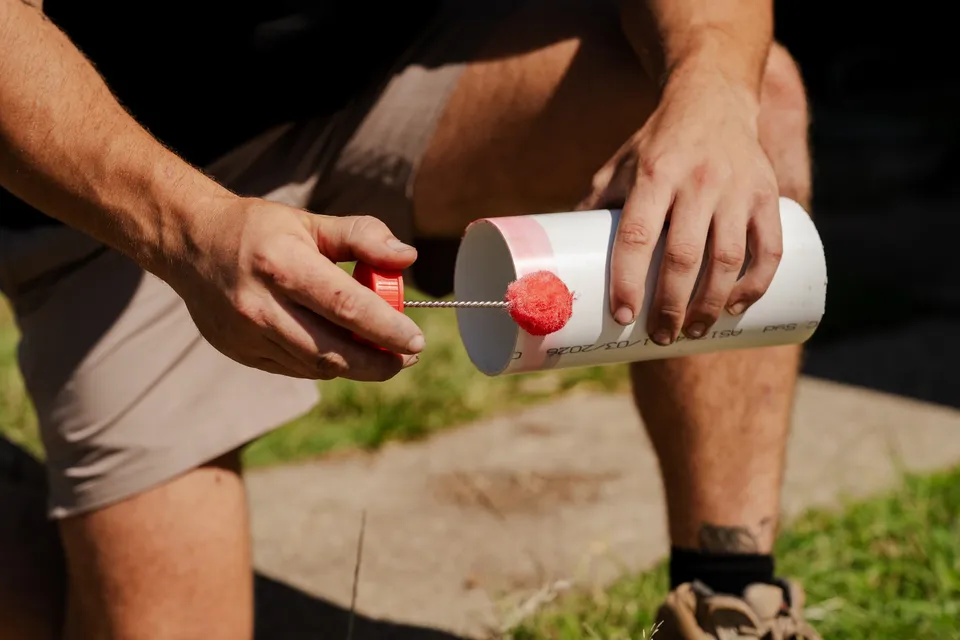
Cistern Washers and the Licence Line
Only three cistern items sit on the QBCC's unregulated list: the drop valve washer, the float valve washer and the suction cup rubber. Anyone with the right know-how may swap those three, provided the finished work still meets the standards.
The rest of cistern work is minor work, which a QBCC licensee has to do. No permit applies and no form goes to the QBCC, but seals, pan connectors, buttons, inlet and outlet valves and any replacement all sit on the licensed side.
Rentals have their own urgency. A blocked or broken toilet is on the Queensland emergency repair list, the owner or manager looks after keeping the place in good repair, and the tenant reports faults quickly.

What Affects the Cost of a Toilet Repair
Four things set the price: the failed part, cracked porcelain, how easily the cistern and stop tap can be reached, and how many parts we replace. Once we have seen the job, the price is fixed before any work begins.
Two boundaries are worth knowing before you spend. Once the porcelain itself is cracked, no washer fixes it, and the cistern or pan gets replaced.
A loo on its third repair often adds up to more in parts and visits than a new suite would.
Any replacement suite we install is certified under WaterMark and listed with the Water Efficiency Labelling and Standards scheme, WELS for short, which records its water rating. The law requires both before a licensed plumber may legally fit a new suite.
Island conditions nudge the maths too. Salt air reaches every street here, so brass fittings on an outside wall give out sooner than the same parts would inland.
A stop tap outside a bathroom wall often needs freeing or replacing at the same visit. On older blocks off Benabrow Avenue, that little valve has often been turning in the same thread since the house was built.
We flag the access work in the quote rather than surprising you on the invoice.
For the wider fixture work, our tap and toilet plumbing page maps the full range, tap repairs covers the spout and mixer side, and a full new suite starts on the toilet installation page.
How a Toilet Repair Visit Runs
- 1

Call or message us
Ring (07) 3520 4094 or use the form and describe what's going on in Bribie Island. A few details up front mean the right gear comes on the first trip.
- 2
We test the cistern before we quote
On site we run a flush cycle, watch the inlet and outlet valves work, check the water level and look over the seals and supply connection. You see the faulty part yourself before anyone picks up a spanner.
- 3
Fixed quote, then the work
We give you a fixed quote before any work starts. It's flat-rate pricing with no hidden fees, and we only start once you approve it.
- 4

Settle up your way
Card and EFTPOS payment on site when the job's finished, or Fix now, pay later if that suits you better.
Plumbing job in Bribie Island?
$0 call-out fees, available 24/7, and same-day where we can.
Toilet Questions From Bribie Island Homes
Call (07) 3520 4094What are the three common faults in a cistern toilet?
Most cistern faults come from the inlet valve, the outlet valve or the seals. A failed inlet valve leaves the cistern not filling, a worn outlet washer makes the loo run on, and perished seals let water escape where it should not.
Why is my toilet cistern not filling up?
Usually a worn or blocked inlet valve, a float set too low, or a stop tap that is not fully open. We check all three on the first visit and quote before any work starts.
Why does my Bribie Island toilet smell of sewage?
The rubbers that seal the pan to the drain may have perished or shifted. A licensed plumber checks those seals and the pan connector, because sewer gas should never get past them.
Why won't my toilet flush properly?
A weak flush usually traces to a low water level in the cistern, rim jets blocked with scale, or a flush mechanism fault like a sticking button. We find which one it is before quoting.
Can a cracked cistern or pan be repaired in Bribie Island?
No. Cracked porcelain is the point where repairing stops and replacing takes over, because no seal or washer fixes a fracture in the ceramic. We quote a replacement cistern or pan instead.

Call Us About the Running ToiletWe'll call you back.
Call (07) 3520 4094 to book a plumber in Bribie Island. We're available 24/7, with $0 call-out fees, flat-rate pricing and same-day where we can.
To claim your $0 call-out fee, call (07) 3520 4094 today.